

Software Optimization Across Python, CUDA, and C++

Software Optimization for Defense Systems Built for Speed and Deployments

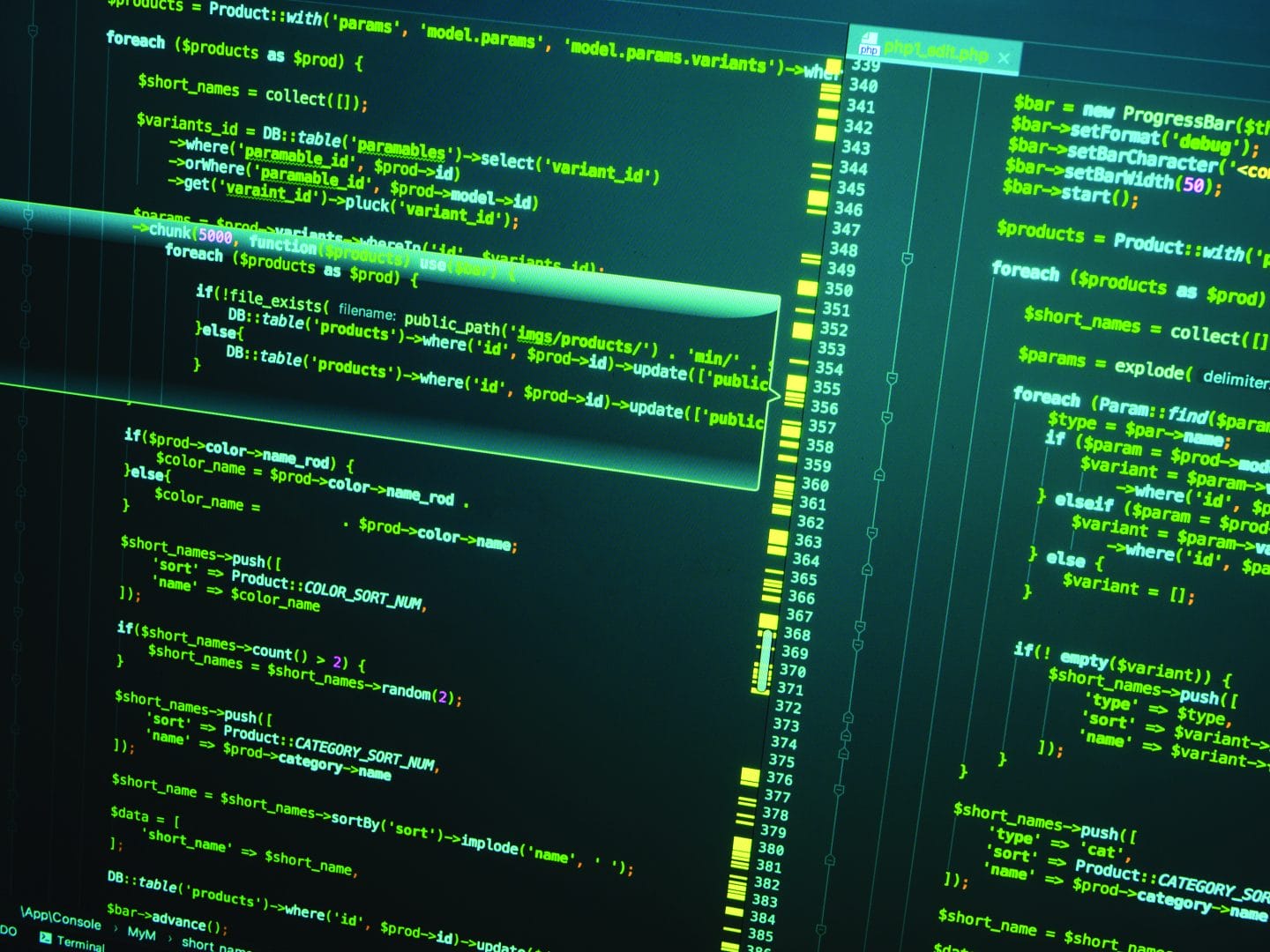
We identify processing constraints in Python and other high-level language implementations, including MATLAB, and refine them to improve execution speed, reduce memory consumption, and scale effectively to larger workloads, while supporting usable interfaces and APIs that allow systems to be effectively deployed and operated.

01

Accelerating Workloads with CUDA for Real-Time Execution

We use custom-written CUDA modules to accelerate compute-intensive workloads, reducing latency and increasing throughput for data-intensive defense applications.
User interacting with touchscreen displaying geospatial data and analytics interface.
02

Engineering High-Performance Systems in C++

We optimize performance-critical components in C++, while keeping the broader algorithm in a higher-level language, to maximize efficiency and align with hardware constraints, ensuring reliable execution within compute, power, and latency limits.
The Etegent Advantage

Optimized Software Development Benefits

Most defense systems fail not because they lack accuracy, but because they can’t perform under operational demands.
Performance Under Constraints
Scalable & Mission-Ready Deployment-Ready Engineering
Improving Existing Systems
Optimizing Performance for Deployed Defense Systems

We work within your existing systems to understand mission objectives, identify performance limitations, and implement targeted improvements. This includes enhancing speed, scalability, and real-time performance without requiring new infrastructure or complete system redesigns.

  • aperture icon in white.
    Boosting speed and latency in OPIR noise suppression and tracking systems
  • radar icon in white.
    Streamlining AI/ML models and simulation engines for real-time operation
  • Scaling software to process large geospatial datasets efficiently

Frequently Asked Questions

Why do defense algorithms fail in deployment?

Most algorithms are built for accuracy in controlled environments, not for operational use. When deployed, they fail to meet requirements for speed, scalability, and integration. Software optimization for defense addresses this gap, enabling systems to deliver usable outputs in mission environments.

What problem does software optimization for defense actually solve?

Software optimization closes the gap between research and operational performance. It ensures algorithms run at speed, scale to real data volumes, and integrate into existing systems, and provide usable interfaces for effective interaction in mission environments.

How do you improve performance without rebuilding the system?

We analyze existing implementations to identify bottlenecks, then refine how algorithms execute. This improves performance without sacrificing accuracy or requiring a rebuild.

How do Python, CUDA, and C++ factor into optimization?

We optimize across the stack by combining deep understanding of high-level algorithms with low-level optimization and hardware behavior. This allows us to improve performance while preserving readable, maintainable code by targeting only the components that require hand optimization.

Can optimization enable real-time performance?

Yes. By reducing latency and increasing throughput, optimization allows systems to meet real-time requirements for processing sensor data and imagery, supporting time-critical operations.

Do you only optimize existing systems, or build new ones as well?

Both. We improve existing systems that are already deployed, and we design new algorithms with deployment constraints in mind from the start, ensuring they are efficient, scalable, and usable in operational environments.

What makes this approach different from standard development?

Standard development often prioritizes accuracy first and performance later. Our approach to software optimization for defense designs and optimizes for deployment from the start, aligning algorithmic choices and software design with hardware constraints and operational requirements to ensure systems perform where they are actually used.

region map decor image.

Ready To Optimize Performance, Latency & Throughput?

Let’s identify where your systems fall short and deliver the performance improvements needed to operate at speed, scale, and under real operational constraints.